
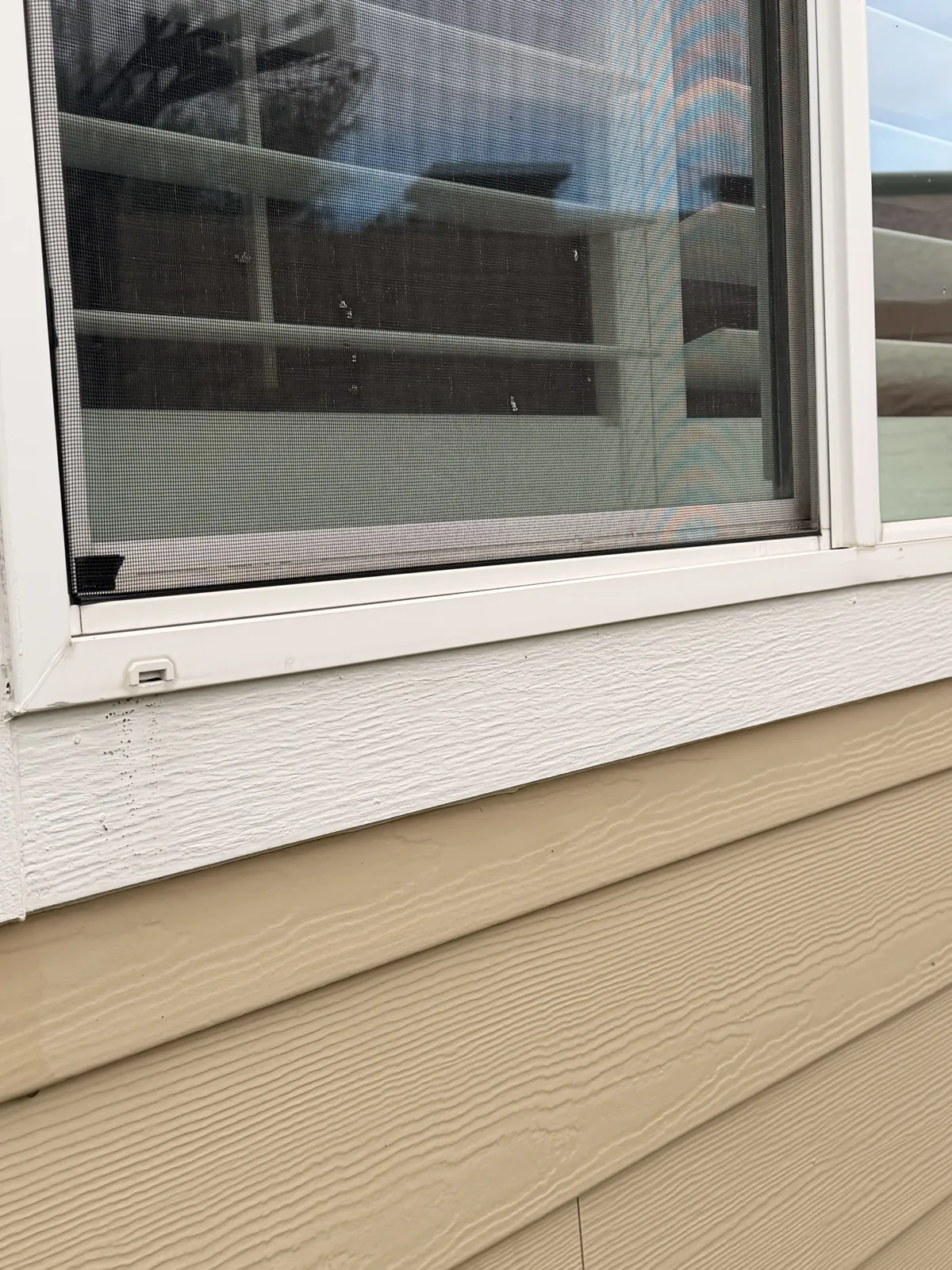
Map the affected panes and note whether sprinkler spray reaches them, whether spots return after rain or irrigation, and whether only certain elevations are affected. Compare the glass with nearby screens and frames. A pattern often helps separate an ongoing water source from general dust or residue.
Check where and when the spots appear
Map the affected panes and note whether sprinkler spray reaches them, whether spots return after rain or irrigation, and whether only certain elevations are affected. Compare the glass with nearby screens and frames. A pattern often helps separate an ongoing water source from general dust or residue.
Distinguish surface residue from glass damage
A removable deposit may respond to an appropriate glass-safe treatment, but mineral etching can remain after cleaning because the glass surface has changed. Do not use blades, abrasive pads or strong acids without confirming glass type and safety. Have stubborn deposits assessed before trying a restoration product.
Reduce repeat contamination
Adjust irrigation so water does not repeatedly strike the glass, clean dirty screens gently and review nearby construction or landscaping dust. Check whether downspouts or roof runoff splash onto lower panes. Cleaning the source area without addressing the source may only provide a short-lived improvement.
Ask for a specific spot-treatment scope
Show the provider close-up and wide photos, explain when the spots return and identify any tinted or coated glass. Ask whether the estimate covers routine cleaning or a separate mineral assessment, what test will be performed and what result can reasonably be expected.
Common questions
Why do water spots return right after window cleaning?
The source may still be active, such as sprinkler overspray or runoff, or the marks may be etched into the glass rather than sitting on top of it. Identify the pattern and glass condition.
Can Utah hard water permanently damage windows?
Mineral deposits left on glass may become difficult to remove and can etch some glass over time. The outcome depends on exposure and glass type; request an assessment before aggressive treatment.
Will rain make clean windows dirty again?
Rain can carry dust and leave marks as water evaporates, but rain itself does not explain every recurring spot. Nearby dirt, irrigation minerals, screens and runoff can all contribute.
Can a professional remove etched glass spots?
Cleaning cannot always reverse etching. Restoration options depend on the glass and damage, so ask for an inspection and a clear explanation of risks before approving polishing or chemicals.
How can I prevent sprinkler spots on windows?
Check spray direction and timing, avoid repeated direct watering of glass and ask a window professional to assess deposits that remain after the water source is corrected.