
Cracks, previous patches, oil, old paint, sealer, salt residue and weak or flaking areas can change the preparation plan. Share what you know about past coatings and leaks. A site assessment can determine whether the slab needs repairs or additional preparation before a new system is appropriate; a coating does not fix active moisture or structural movement.
Start with the existing concrete
Cracks, previous patches, oil, old paint, sealer, salt residue and weak or flaking areas can change the preparation plan. Share what you know about past coatings and leaks. A site assessment can determine whether the slab needs repairs or additional preparation before a new system is appropriate; a coating does not fix active moisture or structural movement.
Ask what preparation is included
Mechanical surface preparation, such as diamond grinding when appropriate, helps create a surface suited to the specified system. Ask how edges and corners will be handled, how dust will be controlled, what repairs are included and how the crew will verify readiness. Quotes that use the same word “epoxy” may still describe different preparation and materials.
Compare the full coating system
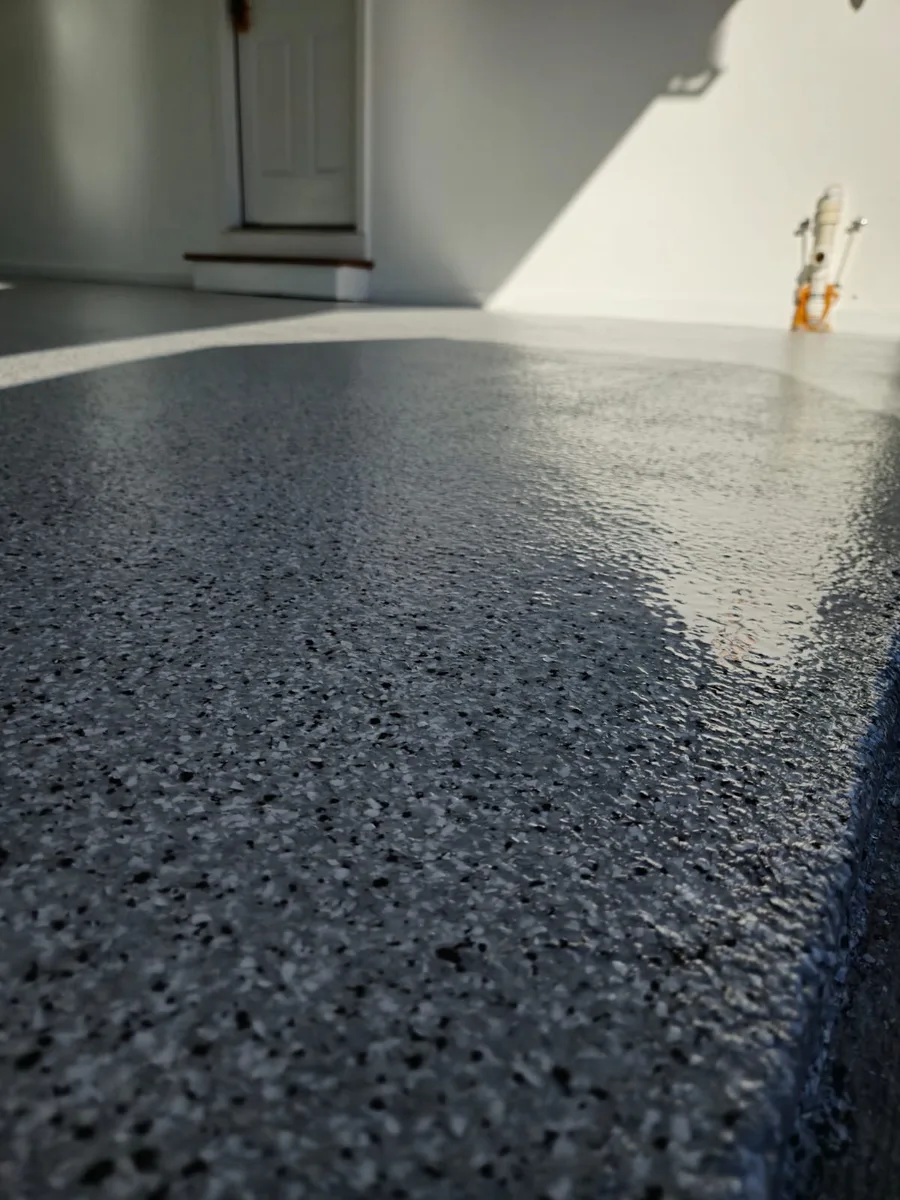
Request the product names and roles for each layer, including primer, base coat, decorative flakes if selected and topcoat. Ask about texture, traction options, UV exposure near the garage door, maintenance and warranty terms. A finish photo alone does not tell you what system is underneath or how it was installed.
Moisture and cure schedule affect the project
Ask whether moisture testing or another slab assessment is needed and what result is acceptable for the proposed products. The written plan should separate installation time from the times for walking, moving stored items and driving on the floor. Temperature and product instructions can affect cure; do not rely on a generic promise that every garage is ready in the same number of hours.
What to include in a Utah coating request
Send the garage dimensions, photos of the whole slab and close-ups of cracks, stains or existing coating, plus your preferred finish and timing needs. Ask for a written scope covering preparation, repairs, layers, exclusions, cleanup, cure milestones and warranty. Epotech installs garage-floor coatings in Utah; contact the team to confirm the best system and availability for your property.
Common questions
How much does a garage floor coating cost in Utah?
The estimate depends on floor area, slab condition, preparation, repairs, moisture requirements, chosen system and access. Request a site-specific written quote; a generic price per square foot may leave out important work.
Why can two epoxy-floor quotes be so different?
They may include different grinding, repairs, moisture checks, layer systems, topcoats, cleanup, warranty coverage or cure schedules. Compare written specifications line by line rather than comparing color names or totals alone.
Does the estimate include crack repair and grinding?
Not automatically. Ask which cracks, patches and preparation steps are included, what conditions cost extra and how concealed slab problems will be handled if they appear during preparation.
How long before I can park on a coated garage floor?
The return-to-use time depends on the products, installation conditions and manufacturer instructions. Get separate written milestones for foot traffic, replacing belongings and vehicle traffic, and follow the installer’s guidance.
Can a coating be installed over an old garage-floor coating?
Sometimes, but the existing system must be identified and assessed for adhesion, damage, contamination and compatibility. Ask the installer to explain the preparation and whether removal or repairs are needed.