
Look for cracked or missing mortar, spalling faces, loose paint, efflorescence, rust marks and damp areas. Photograph the wall dry and identify whether it is painted, sealed or previously treated. Cleaning cannot repair failing mortar, and water can worsen existing openings or hidden moisture problems.
Inspect brick and mortar before cleaning
Look for cracked or missing mortar, spalling faces, loose paint, efflorescence, rust marks and damp areas. Photograph the wall dry and identify whether it is painted, sealed or previously treated. Cleaning cannot repair failing mortar, and water can worsen existing openings or hidden moisture problems.
Start with the least aggressive method
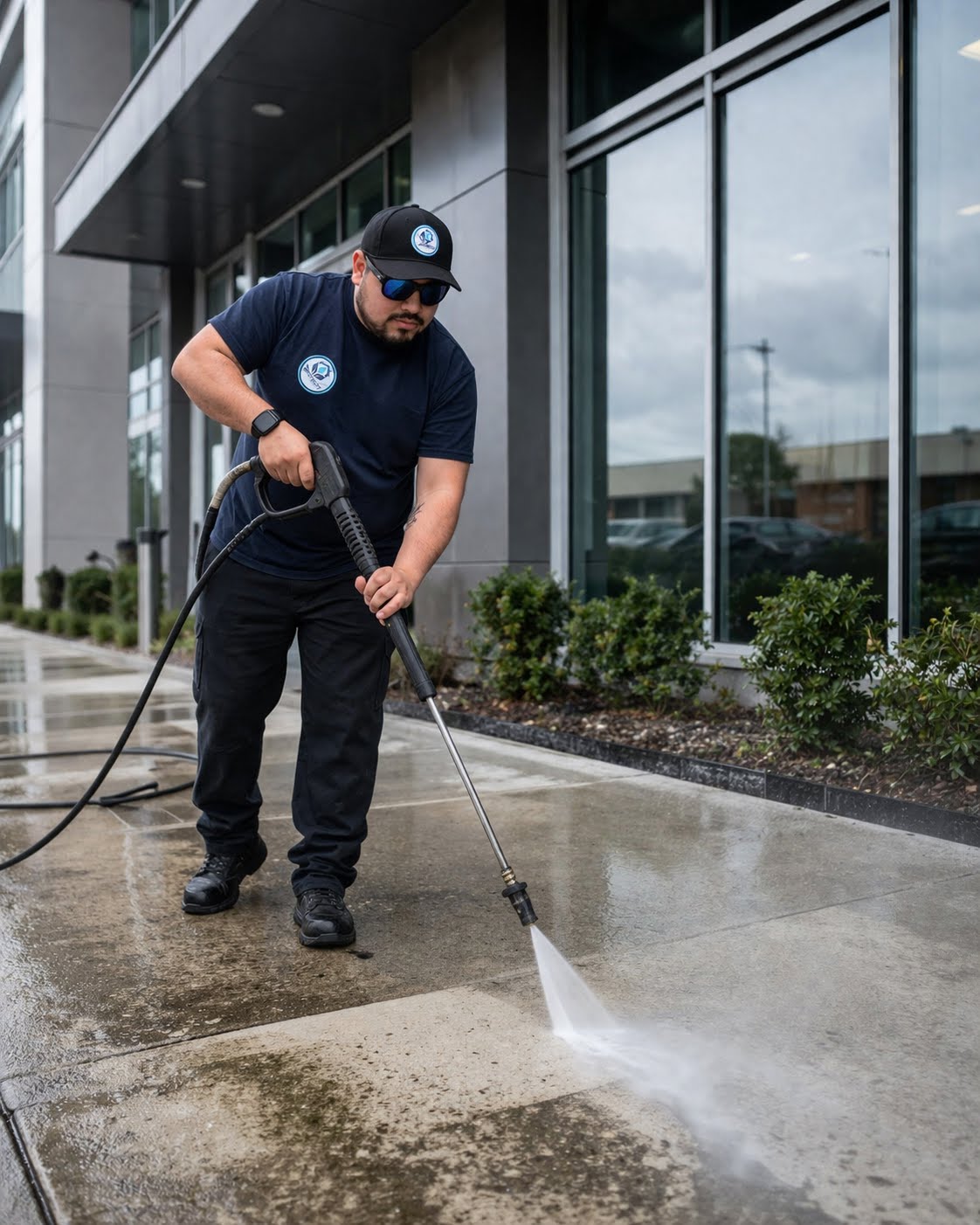
Remove loose dust with a soft masonry brush and test a small, inconspicuous area using a compatible cleaner as labeled. Avoid a concentrated high-pressure jet, especially near mortar joints, windows, vents and roof edges. Do not use an acid simply because a white deposit is visible; first determine whether it is mineral residue or moisture-related efflorescence.
Protect runoff paths and nearby finishes
Masonry cleaner and rinse water can affect plants, metals, glass, painted trim and neighboring surfaces. Read product directions, protect the work area and confirm where runoff will go. Never mix cleaning chemicals. If the wall is historic, painted or shows active moisture, seek advice from a qualified masonry professional before washing.
When a professional assessment is useful
Ask the provider to identify the brick and mortar condition, explain the cleaner and rinse method, describe a test patch and note expected limitations. Share repair history and recurring dampness. For a home in South Jordan or the Salt Lake Valley, confirm the provider serves the address and request a written scope.
Common questions
Can I pressure wash a brick house?
It depends on the brick, mortar, age and condition. Concentrated high pressure can erode joints or drive water into the wall. Use the manufacturer’s guidance and a cautious test, or ask a masonry professional.
Why are there white marks on my brick?
They may be efflorescence, irrigation minerals or another deposit. The source matters; recurring moisture can bring salts back after cleaning.
Does vinegar safely remove white deposits from brick?
Not in every case. Acids can react with masonry and damage mortar, metals or nearby plants. Identify the deposit and check the masonry maker’s guidance before using a product.
Should brick be sealed after washing?
Not automatically. A coating can change how masonry handles moisture. Ask a qualified masonry professional whether a breathable product is suitable for that wall and its condition.
When should I postpone cleaning brick?
Postpone if mortar is loose, the wall is actively wet, freezing conditions are expected, or the proposed product cannot be used safely under the current weather and runoff conditions.